Guest posting is one of the most effective and trusted link building strategies used in SEO today. If you are new to SEO or trying to improve your website rankings, understanding how guest posting works for SEO can help you make smarter decisions and avoid low-quality backlinks.
Guest posting means writing and publishing content on another website in exchange for a backlink to your own site. When done correctly, guest posting helps improve search engine rankings, build website authority, and drive relevant referral traffic.
In this step-by-step guide, you will learn how guest posting works, why it still matters in 2026, how backlinks help SEO, and how to use guest posting safely without risking Google penalties.
What Is Guest Posting?
Guest posting, also known as guest blogging, is the process of publishing an article on someone else’s website within your niche. In return, the website owner allows you to add one or more backlinks to your website.
These backlinks act as trust signals for search engines. When authoritative and relevant websites link to your content, Google sees your site as more credible and valuable.
Guest posting can be:
- Free guest posting (manual outreach and relationship-based)
- Paid guest posting (editorial placement on authority websites)
Both approaches work for SEO if the websites are real, niche-relevant, and have organic traffic.
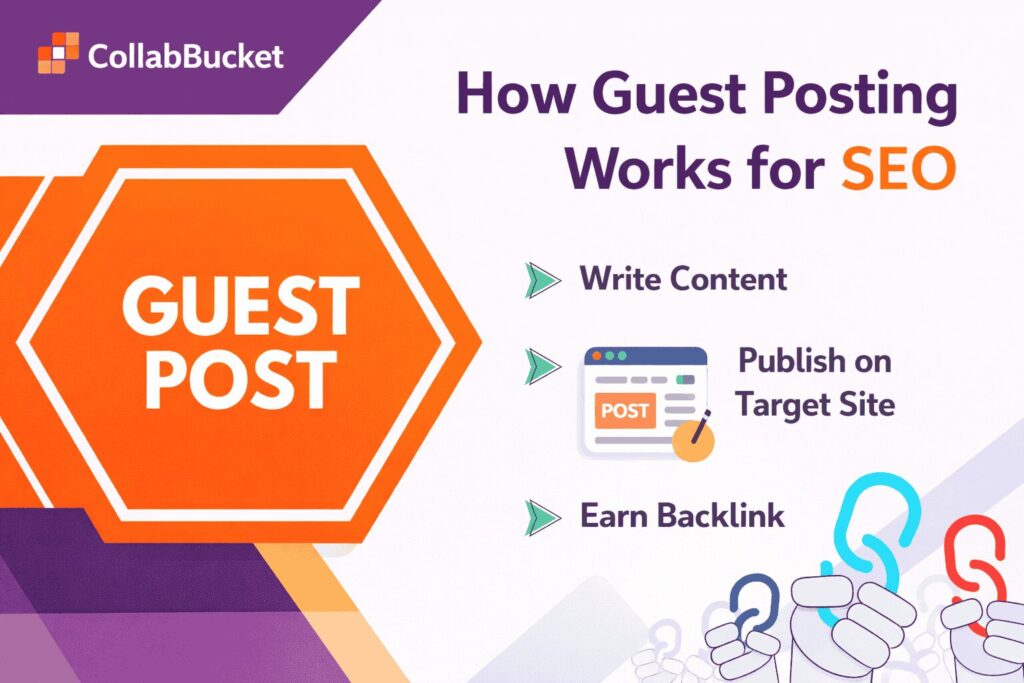
How Guest Posting Works for SEO (Step-by-Step)
To fully understand how guest posting works for SEO, let’s break the process into clear steps used by professional link builders.
Step 1: Finding Relevant Websites
The first step is finding websites that match your niche. Relevance matters more than high domain authority alone.
For example:
- SaaS websites benefit from links on tech or software blogs
- E-commerce websites perform better with links from business, product, or review blogs
Relevant links send strong topical signals to search engines and help pages rank faster.
Step 2: Checking Website Quality
Not all websites are safe for guest posting. Quality analysis is critical before publishing any content.
SEO experts check:
- Organic traffic trends
- Niche relevance
- Content quality
- Spam score
- Outbound link profile
Publishing on low-quality or spam websites can damage SEO instead of helping it. This is why manual guest posting is safer than bulk automation.
Step 3: Creating High-Quality Content
Content quality plays a major role in how guest posting works for SEO. Search engines prefer content that provides real value to users.
A strong guest post should:
- Be 100% original
- Solve a specific problem
- Match the host website’s tone
- Avoid promotional or sales-heavy language
High-quality content increases approval rates and keeps backlinks safe long-term.
Step 4: Adding Natural Backlinks
Backlinks are the core reason guest posting works for SEO. These links are placed naturally within the content or author bio.
Best backlink practices include:
- Using branded or natural anchors
- Avoiding exact-match anchor overuse
- Linking to relevant internal pages
- Keeping links contextual
Natural backlinks help search engines trust your website and improve ranking stability.
Step 5: Indexing and Ranking Impact
Once the guest post is published, search engines crawl and index the page. Over time, the backlink transfers authority to your website.
This results in:
- Better keyword rankings
- Increased domain trust
- Higher organic traffic
- Faster indexing of linked pages
This explains clearly how guest posting works for SEO from a ranking perspective.
Benefits of Guest Posting for SEO
When done correctly, guest posting provides multiple SEO and branding benefits:
- Improves search engine rankings
- Builds website authority and credibility
- Drives targeted referral traffic
- Increases brand exposure
- Helps new pages rank faster
- Supports long-term SEO growth
These benefits make guest posting one of the most reliable white-hat link building strategies.
Guest Posting for Different Niches
Guest posting works across industries, but the strategy changes slightly depending on the niche.
- SaaS & Tech: Focus on authority blogs, product tutorials, and case studies
- E-commerce: Target review blogs, buyer guides, and comparison sites
- Local Businesses: Use niche and location-based blogs for relevance
- Agencies & Services: Publish on marketing and business websites
Choosing niche-relevant platforms increases link value and ranking impact.
Free vs Paid Guest Posting: Which Is Better?
Both free and paid guest posting can work for SEO, but they serve different purposes.
Free guest posting:
- Requires time and outreach
- Slower but relationship-driven
- Limited scalability
Paid guest posting:
- Faster placements
- Editorial control
- Scalable link building
For businesses and agencies, paid guest posting on real authority sites is often more efficient and consistent.
Is Guest Posting Safe in 2026?
Yes, guest posting is safe in 2026 when done correctly. Google penalizes spam, not guest posting itself. Safe guest posting follows these principles:
- Manual outreach
- Editorial content
- Real websites with traffic
- Natural anchor usage
- Niche relevance
Avoid link farms, automated tools, and low-quality PBNs. Ethical guest posting aligns with Google’s guidelines.
Common Guest Posting Mistakes to Avoid
Many websites fail to see results because of avoidable mistakes:
- Repeating the same anchor text
- Posting on irrelevant niches
- Choosing websites with zero traffic
- Buying cheap bulk links
- Ignoring content quality
Avoiding these mistakes protects your site from penalties and ranking drops.
How Many Guest Posts Do You Need Per Month?
The number of guest posts depends on competition, niche difficulty, and website age.
General guidelines:
- New websites: 2–4 guest posts per month
- Medium competition: 4–8 guest posts per month
- High competition niches: 8–12 guest posts per month
Consistency and quality always matter more than quantity.
How to Track Guest Posting Results
To measure success, track:
- Keyword ranking improvements
- Organic traffic growth
- Referral traffic
- Indexing speed
Tools like Google Search Console and analytics platforms help monitor guest posting performance over time.
Final Thoughts
Now you clearly understand how guest posting works for SEO and why it remains a powerful strategy for improving rankings, authority, and traffic.
Guest posting is not about shortcuts. It is about publishing quality content on real websites, earning trust, and building sustainable backlinks.
If you want safe, manual guest posting on real niche websites, professional guest posting and link building services can help you scale faster without risking penalties.






One comment
Jarrod
Very soon this web page will be famous among all blogging visitors, due
to it’s pleasant articles
salaheddine kassab
Thank you for any other informative blog. Where else could I am getting that kind of info written in such an ideal method?
I’ve a challenge that I’m simply now working on, and I have been on the look out for such information.