Backlinks continue to play an important role in search engine optimization. However, not every backlink works in the same way. One of the most common questions website owners ask is:
What is the difference between dofollow and nofollow links, and which one matters more for SEO?
If you are building links through guest posting, outreach, digital PR, or competitor analysis, understanding dofollow vs nofollow links is essential for long-term ranking stability.
This guide explains everything in a clear and practical way.
Dofollow vs Nofollow Links (Quick Definition)

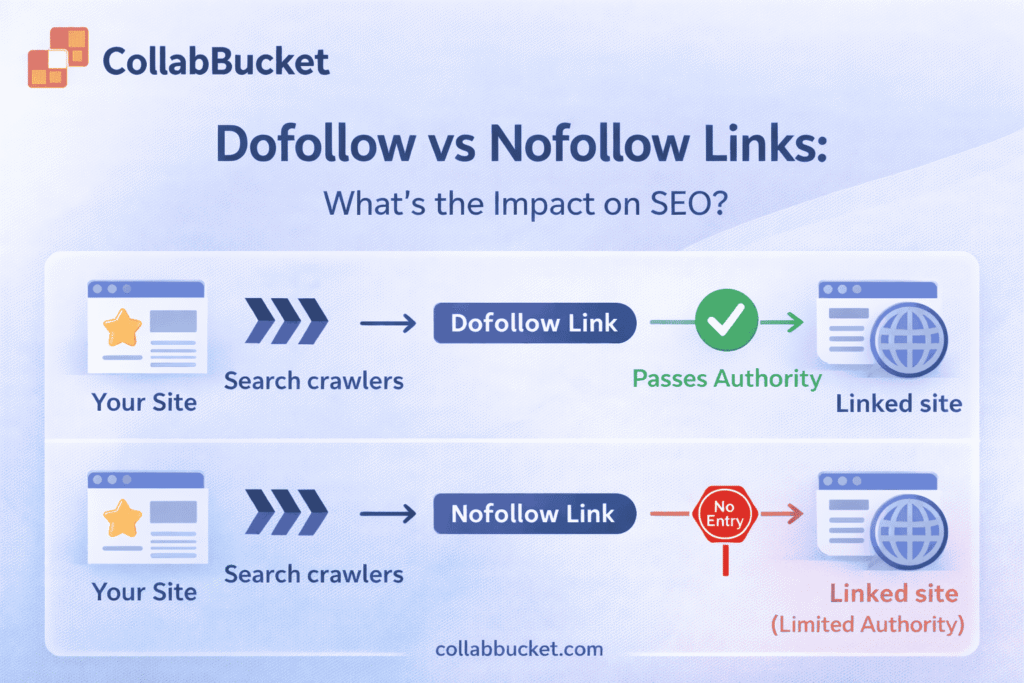
Dofollow links pass link equity (ranking value) from one website to another, helping improve search visibility. Nofollow links do not pass full authority but still support traffic, discovery, and a natural backlink profile. Both are important for modern SEO.
What Are Dofollow Links?
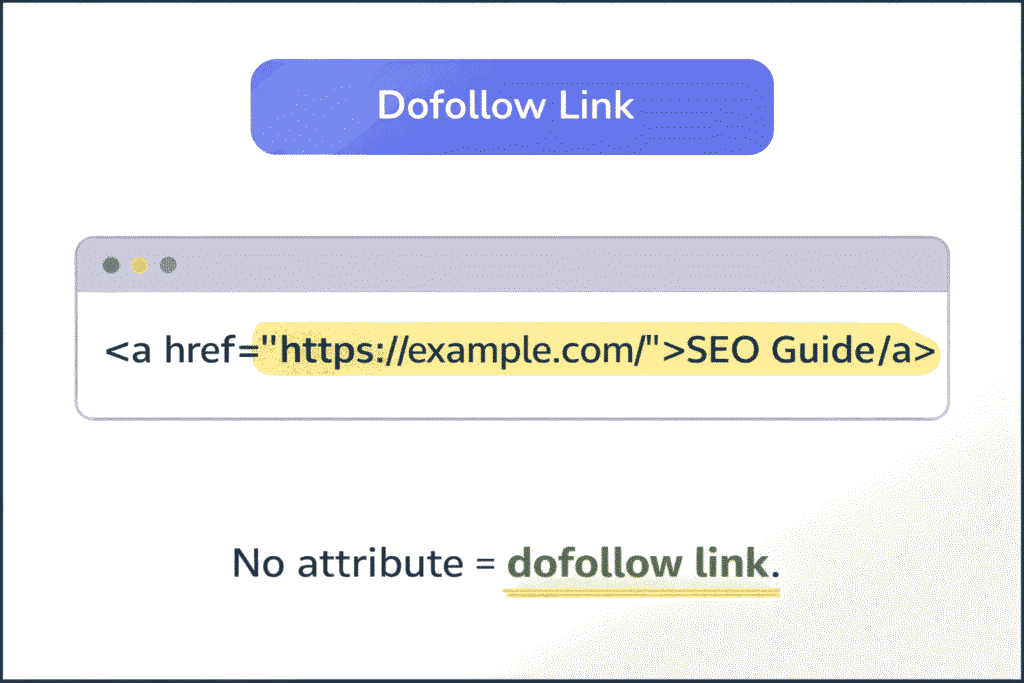
A dofollow link is a normal hyperlink that allows search engines to follow the link and pass authority to the linked page.
By default, most links on the web are dofollow unless they contain a special attribute.
When you receive a dofollow backlink:
- Search engines can crawl it
- Authority signals are passed
- It can contribute to keyword rankings
- It strengthens domain credibility over time
For example, if you publish a guest post on a relevant marketing blog and receive a contextual backlink within the article, that link is typically dofollow. Over time, links like these help improve ranking potential.
Because they pass ranking signals, dofollow links are often prioritized in link building campaigns.
However, focusing only on dofollow links is not a complete strategy in 2026.
What Are Nofollow Links?
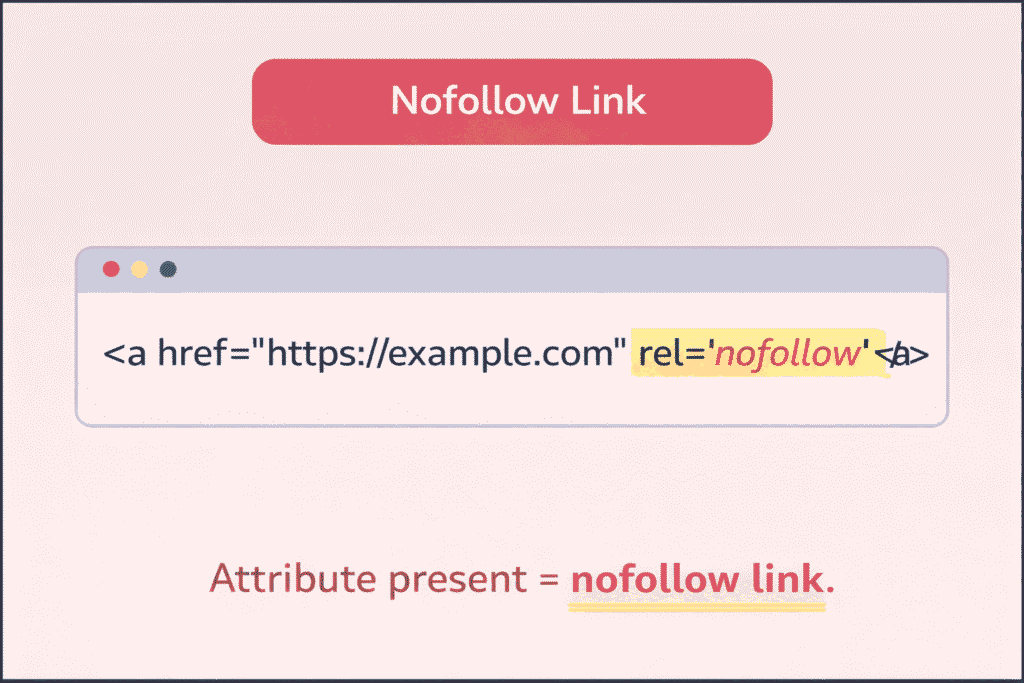
A nofollow link contains an attribute in the HTML code:
rel=”nofollow”
This tells search engines not to pass full link equity to the linked page.
Nofollow links were originally introduced to reduce spam in blog comments and forums. Over time, search engines updated how they treat these links.
Today, nofollow links :
- May not pass full authority
- Can still be crawled
- Can bring referral traffic
- Contribute to brand visibility
- Help maintain a natural backlink profile
Search engines now treat nofollow links as “hints” rather than strict instructions. This means they may still consider them as part of overall link evaluation.
Nofollow links are not useless. They simply serve a different purpose.
Dofollow vs Nofollow Links: Key Differences
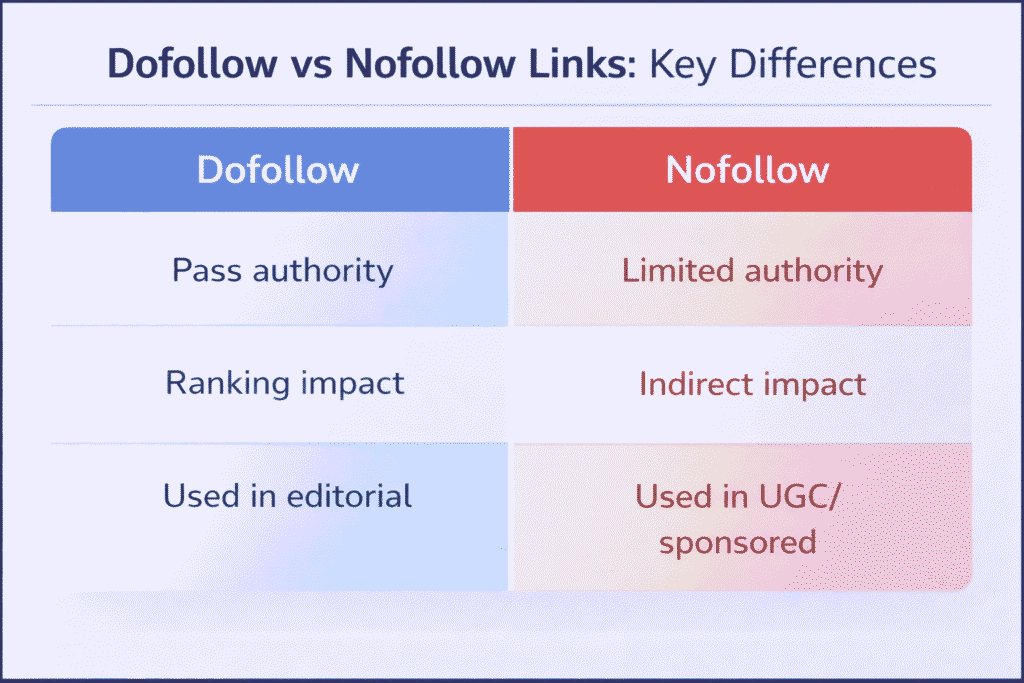
Here is a simple comparison :
Dofollow Links
- Pass link equity
- Directly support rankings
- Strengthen authority
- Common in guest posts and editorial links
Nofollow Links
- Do not pass full link equity
- Support natural profile balance
- Often used in comments, forums, and sponsored content
- Can drive referral traffic
In modern SEO, both types play a role in a healthy backlink strategy.
Do Nofollow Links Help SEO?
Yes, but indirectly.
While nofollow links may not transfer strong ranking signals, they still support SEO in several ways:
1. Page Discovery
Search engines can use nofollow links to discover new content.
2. Referral Traffic
A nofollow link from a popular blog can bring targeted visitors.
3. Brand Signals
Mentions from trusted websites strengthen brand presence.
4. Natural Backlink Profile
A backlink profile with only dofollow links may appear artificial.
In practical link building campaigns, websites that maintain a balanced mix of dofollow and nofollow links tend to show more stable growth over time.
From experience in outreach-based campaigns, sites with roughly 70–85% dofollow links and the rest nofollow links often maintain a healthier long-term ranking pattern compared to profiles that are entirely dofollow.
Balance supports trust.
What Actually Matters More Than Link Type in 2026?
In 2026, search engines evaluate links in a broader and more intelligent way. The focus has shifted from link type alone to overall link quality and context.
Here are the key factors that matter most :
1. Relevance
A relevant backlink from a website in your industry carries more value than a high-authority link from an unrelated niche.
For example, if you provide SEO or guest posting services, a contextual backlink from a digital marketing blog is more meaningful than one from an unrelated website.
Search engines analyze topical relevance more carefully than before.
2. Context and Placement
Links placed naturally inside useful content are more valuable than links placed in:
- Footers
- Sidebars
- Author bio sections
Contextual placement signals editorial value.
In 2026, surrounding content quality and topical alignment influence how search engines interpret a link.
3. Anchor Text Distribution
A natural backlink profile includes a mix of :
- Branded anchors
- Generic anchors (like “click here”)
- Partial keyword anchors
- Limited exact match anchors
Over-optimized anchor text can create imbalance.
Both dofollow and nofollow links contribute to anchor diversity.
4. Referring Domain Diversity
Ten backlinks from ten different domains usually carry more value than ten links from one domain.
Domain diversity signals broader recognition across the web.
5. Link Growth Pattern
Search engines evaluate how links are acquired over time.
Steady and natural growth is more important than sudden spikes.
A profile that gradually gains both dofollow and nofollow mentions appears more authentic.
How Search Engines Evaluate Links in 2026
Search engines now analyze backlinks using more advanced systems.
They evaluate :
- Content quality around the link
- Editorial intent
- Topical authority
- Spam patterns
- User engagement signals
The link attribute alone (dofollow or nofollow) is only one small part of the evaluation.
Modern algorithms focus on context and trust rather than just link mechanics.
This is why high-quality content combined with natural link acquisition produces more stable results.
When Should You Use Nofollow Links?
Nofollow links are commonly used for :
- Blog comments
- Forum posts
- User-generated content
- Sponsored posts
Search engines also introduced additional attributes :
- rel=”ugc” for user-generated content
- rel=”sponsored” for paid links
Using the correct attribute helps maintain transparency and long-term SEO health.
If you publish sponsored content or paid collaborations, using proper link attributes supports compliance with search engine guidelines.
Should You Build Only Dofollow Links?
Building only dofollow backlinks is not recommended.
A backlink profile that contains :
- 100% dofollow links
- Mostly exact match anchors
- No brand mentions
May look unnatural.
High-performing websites usually have :
- Majority dofollow links
- Some nofollow links
- Branded anchor diversity
- Mentions across multiple platforms
The goal is not to avoid nofollow links. The goal is to build a balanced backlink strategy.
Practical Comparison
Consider two websites.
Website A:
- 80 dofollow links
- 0 nofollow links
- Mostly exact match anchors
Website B:
- 60 dofollow links
- 20 nofollow links
- Mostly branded anchors
- Contextual placements
In many cases, Website B appears more natural to search engines.
A realistic pattern often supports long-term ranking stability.
How to Check if a Link Is Dofollow or Nofollow

You can check link attributes by :
- Right-clicking and selecting “Inspect” in your browser
- Looking for rel=”nofollow” in the HTML
- Using SEO tools like Ahrefs or SEMrush
- Using browser extensions
If no special attribute is present, the link is usually dofollow by default.
Monitoring your dofollow vs nofollow distribution helps maintain balance.
Best Link Building Strategy for 2026
Instead of focusing only on link type, prioritize :
- High-quality content
- Relevant industry websites
- Editorial placements
- Natural anchor text
- Steady outreach
Guest posting, digital PR, niche edits, and organic mentions together create stronger long-term SEO growth.
A thoughtful approach performs better than chasing only dofollow backlinks.
Final Thoughts
Understanding dofollow vs nofollow links is important, but link quality matters more than link type alone.
Dofollow links pass authority and directly support rankings.
Nofollow links support visibility, referral traffic, and profile balance.
In 2026, search engines evaluate backlink profiles holistically. They analyze:
- Relevance
- Context
- Diversity
- Growth pattern
- Trust signals
Instead of trying to build only one type of link, focus on creating a natural, balanced, and consistent link building strategy.
When backlinks are relevant, contextual, and earned through valuable content, ranking potential improves steadily.
A balanced approach supports long-term success in SEO.