
Backlinks have always been an important ranking factor in search engine optimization. However, not every backlink provides the same level of value. The placement, relevance, and context of a link significantly influence how search engines evaluate it.
This is where contextual backlinks become especially important.
A contextual backlink is placed naturally inside the main content of a webpage where the surrounding text relates to the linked page. Because the link appears within relevant information, search engines often treat it as a stronger signal of authority and topic relevance.
In modern SEO strategies, contextual backlinks remain one of the most reliable ways to strengthen website credibility, improve keyword rankings, and increase organic traffic.
This guide explains what contextual backlinks are, why they matter for SEO, and how websites can build them safely through methods like guest posting, editorial placements, and outreach collaborations.
What Are Contextual Backlinks?
A contextual backlink is a hyperlink placed within the body of a webpage’s content where the surrounding text is relevant to the linked topic.
Unlike links placed in sidebars, footers, or navigation menus, contextual backlinks appear naturally within an article or blog post.
For example, imagine a blog post discussing SEO link-building strategies. Within the article, the author references another guide explaining how backlinks influence rankings and includes a hyperlink to that page. Because the link appears within relevant content, it becomes a contextual backlink.
Key characteristics of contextual backlinks include:
- The link appears inside the main content of a webpage
- The surrounding text relates to the linked topic
- The link is integrated naturally within sentences
- The linked page provides additional information for readers
Search engines prefer these links because they resemble genuine editorial references rather than artificial link placements.
Why Contextual Backlinks Are Important for SEO
Search engines evaluate backlinks by analyzing not only the link itself but also the context surrounding it. When a link appears within relevant content, it strengthens the topical relationship between the linking page and the destination page.
Because of this, contextual backlinks often provide stronger SEO value compared to links placed in templates or unrelated sections of a website.
1. Improved Topical Relevance
Contextual backlinks help search engines understand the topic of the linked page.
When a link appears inside related content, it reinforces keyword relevance and topical alignment. This makes it easier for search engines to associate the linked page with specific search queries.
2. Stronger Authority Signals
Links placed within editorial content tend to be interpreted as genuine recommendations.
When reputable websites mention and link to useful resources within their articles, those links help build credibility and trust for the linked website.
Over time, websites that earn contextual backlinks from relevant sources often develop stronger domain authority.
3. Better Link Quality
A single contextual backlink from a relevant article can sometimes provide more SEO value than multiple low-quality links from unrelated websites.
Search engines prioritize quality, relevance, and context rather than the number of links alone.
4. More Natural Backlink Profile
When contextual backlinks are built through content collaboration and editorial placements, they contribute to a natural backlink profile.
This reduces the risk of unnatural link patterns that could negatively affect search rankings.
Contextual Backlinks vs Other Types of Links
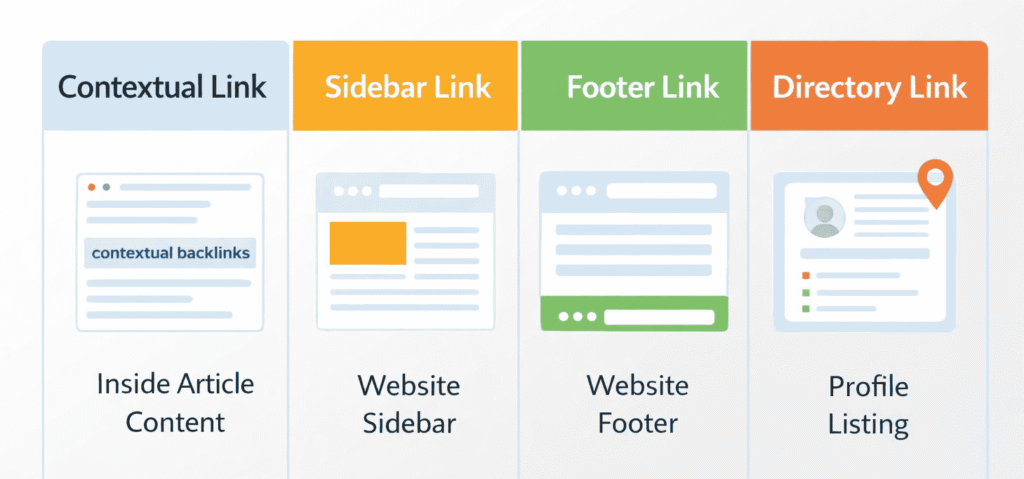
Not all backlinks influence SEO in the same way. Understanding the difference between link types helps when building a balanced strategy.
1. Contextual Links
Contextual links appear within the main body of a webpage and relate directly to the topic being discussed.
Example :–
An article about digital marketing strategies linking to a guide explaining SEO link building techniques.
These links provide both relevance and additional value to readers.
2. Sidebar or Footer Links
Sidebar and footer links appear in website templates and repeat across many pages.
Although they still count as backlinks, they often provide less contextual relevance because they are not placed inside editorial content.
3. Directory or Profile Links
Directory links and profile links are placed in listings, business directories, or user profiles.
While they can contribute to backlink diversity, they usually offer less contextual relevance compared to links embedded within articles.
Among these link types, contextual backlinks remain one of the most valuable forms of backlinks for SEO.
How to Build Contextual Backlinks
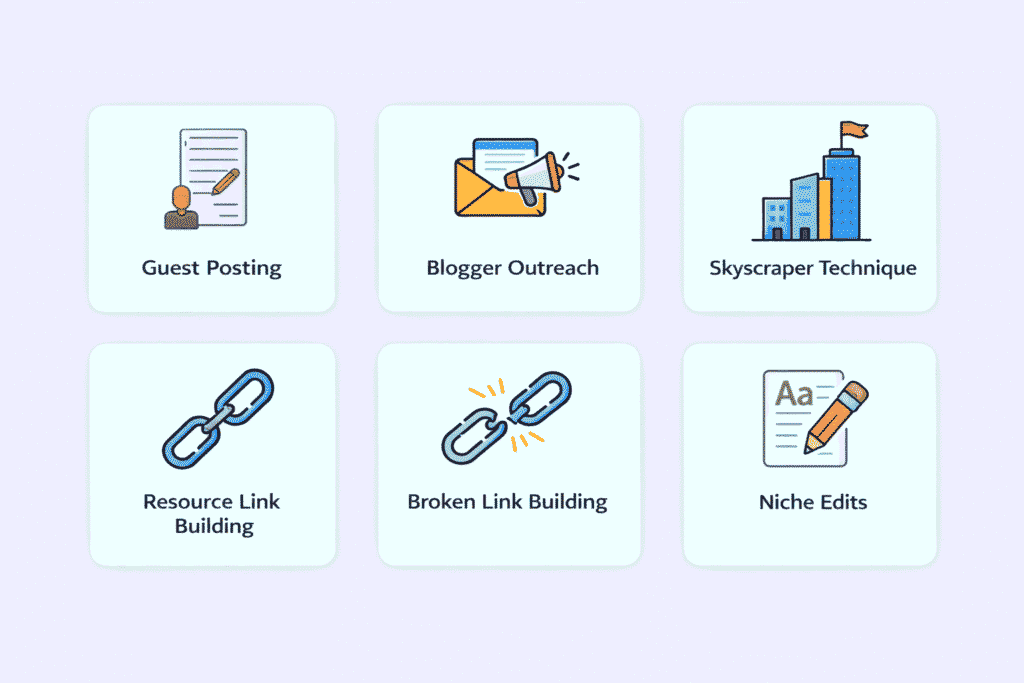
There are several legitimate methods for building contextual backlinks while maintaining safe SEO practices.
1. Guest Posting
Guest posting is one of the most widely used strategies for acquiring contextual backlinks.
It involves contributing high-quality articles to relevant websites within your industry. Within the article, a contextual link can be included naturally to reference useful resources.
When guest posts provide genuine value and insights, the backlinks become meaningful editorial references rather than promotional links.
2. Editorial Mentions
Editorial backlinks occur when websites reference your content within their articles because it provides helpful information.
These links are often earned when you publish research, guides, case studies, or industry insights that other writers find useful.
3. Resource Citations
Many websites maintain educational resources, tools lists, or learning guides. If your content is relevant, it may be included as a contextual citation within those resources.
These types of mentions often generate valuable contextual backlinks.
4. Industry Collaborations
Collaborating with industry blogs, media publishers, or digital marketing platforms can also lead to contextual backlink opportunities.
Content partnerships, interviews, and collaborative articles often include contextual links that reference relevant resources.
Contextual Backlink Packages and SEO Services
Many businesses choose to work with professional SEO providers to manage outreach campaigns and content placements.
Some providers offer contextual backlink packages, where links are placed on relevant blogs or publisher websites within editorial articles.
These packages usually vary based on factors such as :–
- Domain authority of the linking website
- Website niche relevance
- Traffic quality
- Content quality and placement type
Another option is a monthly contextual backlinks service, where new links are built gradually over time.
This approach helps maintain steady link growth instead of sudden spikes in backlinks, which may appear unnatural to search engines.
When evaluating contextual backlinks services, businesses should consider :–
- The relevance of the linking websites
- The quality of the content where the link appears
- Natural anchor text usage
- Gradual link acquisition strategies
A balanced approach helps maintain a healthy backlink profile.
Should You Buy Contextual Backlinks?
Some website owners decide to buy contextual backlinks through outreach platforms, SEO marketplaces, or guest post services.
While buying links directly can be risky if done carelessly, many legitimate services focus on content-based placements rather than automated links.
These services typically publish original articles on relevant websites and include contextual backlinks within the content.
Before choosing any contextual backlinks service, it is important to ensure that:
- The websites are relevant to your niche
- The content provides real informational value
- Links appear naturally within the article
- Anchor text is diversified and balanced
Responsible link-building providers focus on editorial quality rather than mass link placements.
Best Practices for Building Contextual Backlinks
A sustainable SEO strategy focuses on quality, relevance, and natural link growth. The following practices help maintain safe and effective link-building campaigns.
1. Focus on Relevant Websites
Links from websites within the same industry provide stronger signals than links from unrelated niches.
Relevance helps search engines understand the relationship between topics.
2. Use Natural Anchor Text
Anchor text should flow naturally within the sentence. Overusing exact keywords repeatedly may create an unnatural pattern.
Balanced anchor text improves link credibility.
3. Build Links Gradually
Sudden spikes in backlinks can sometimes appear unnatural.
Building contextual backlinks steadily over time creates a more organic growth pattern.
4. Prioritize Content Quality
The article containing the contextual backlink should provide useful information for readers.
High-quality content improves both user engagement and SEO value.
5. Diversify Link Sources
Building backlinks from different websites and content types helps create a natural backlink profile.
A diverse link profile reduces potential risks and strengthens long-term SEO stability.
Common Mistakes When Building Contextual Backlinks
Many websites attempt to build contextual backlinks but make mistakes that reduce their effectiveness.
Some common issues include :–
- Placing links on irrelevant websites
- Using overly optimized anchor text repeatedly
- Publishing low-quality guest posts
- Building too many links within a short period
Search engines evaluate backlink patterns carefully. Avoiding these mistakes helps maintain a strong and balanced SEO strategy.
How Contextual Backlinks Support Long-Term SEO Growth
Search engines evaluate backlink profiles holistically. They analyze not only the number of links but also their placement, relevance, and credibility.
Contextual backlinks contribute to long-term SEO growth by :-
- Strengthening topical authority
- Supporting keyword relevance
- Increasing organic search visibility
- Building website credibility
When contextual backlinks come from relevant and trustworthy websites, they help search engines understand the expertise and value of your content.
Over time, this can lead to stronger rankings and more consistent organic traffic.
Final Thoughts
Contextual backlinks remain one of the most valuable components of modern SEO.
Because they appear naturally within relevant content, they help search engines understand the relationship between topics and webpages. These links often provide stronger authority signals compared to template links or unrelated placements.
A successful contextual backlink strategy focuses on:-
- Relevant website placements
- Natural anchor text usage
- High-quality editorial content
- Gradual link acquisition
Many businesses work with professional providers offering contextual backlink packages or monthly contextual backlinks services to scale their outreach efforts.
When implemented responsibly, contextual backlinks can strengthen website authority, improve search visibility, and support long-term SEO growth.