
Backlinks remain one of the strongest ranking factors in SEO. However, building links without understanding your competition often leads to slow progress.
A smarter approach is to analyze competitor backlinks first.
When you study where competitors are getting their links, how many referring domains they have, and what kind of anchor text they use, you can build a more realistic and strategic link building plan.
This guide explains the full process in a practical and easy way.
What Is Competitor Backlink Analysis?
Competitor backlink analysis is the process of studying the backlink profile of websites that rank higher than you for your target keywords.
Instead of guessing how many links you need, you examine :
- Total referring domains
- Link quality
- Anchor text distribution
- Types of backlink
- Link growth patterns
This helps you understand what level of authority Google is rewarding in your niche.
For example, if the top three ranking pages all have 60–80 referring domains, and your page has only 15, the gap becomes clear. Now your strategy has direction.
Why Analyzing Competitor Backlinks Is Important
Before starting any link building campaign, you need to understand the competition level.
1. It Shows the Real Authority Benchmark
Many beginners focus only on content length. But backlinks still play a major role.
If competitors ranking on page one have:
- 40 referring domains → moderate competition
- 120+ referring domains → strong competition
This tells you whether your goal is realistic in the short term.
Mini Example :
If you are targeting a keyword like “guest posting services” and the average referring domain count is around 70, you should not expect to rank with only 10 backlinks.
2. It Reveals Link Opportunities
When you analyze competitor backlinks, you often discover patterns.
You may notice that:
- Multiple competitors are publishing guest posts on the same blog
- Several links come from niche resource pages
- Industry blogs are linking to similar content
If a website links to two or three of your competitors, there is a strong possibility they may link to you as well. This saves time compared to random outreach.
3. It Helps You Build a Practical Strategy
Instead of asking :
“How many backlinks do I need?”
You ask:
“How many relevant referring domains do I need to compete?”
That difference creates a more structured SEO plan.
Step 1: Identify Your Real SEO Competitors
Your business competitors are not always your SEO competitors.
Search your target keyword in Google and check:
- Top 5 ranking pages
- Content depth
- Domain strength
- Number of referring domains
Avoid comparing yourself to extremely large platforms unless they operate directly in your niche.
Mini Example:
If you run a guest posting service website, compare with similar SEO agencies — not global marketplaces with massive authority. This gives you a realistic comparison.
Step 2: Use a Reliable Backlink Analysis Tool
To analyze competitor backlinks accurately, use trusted SEO tools such as:
Inside the tool, review:
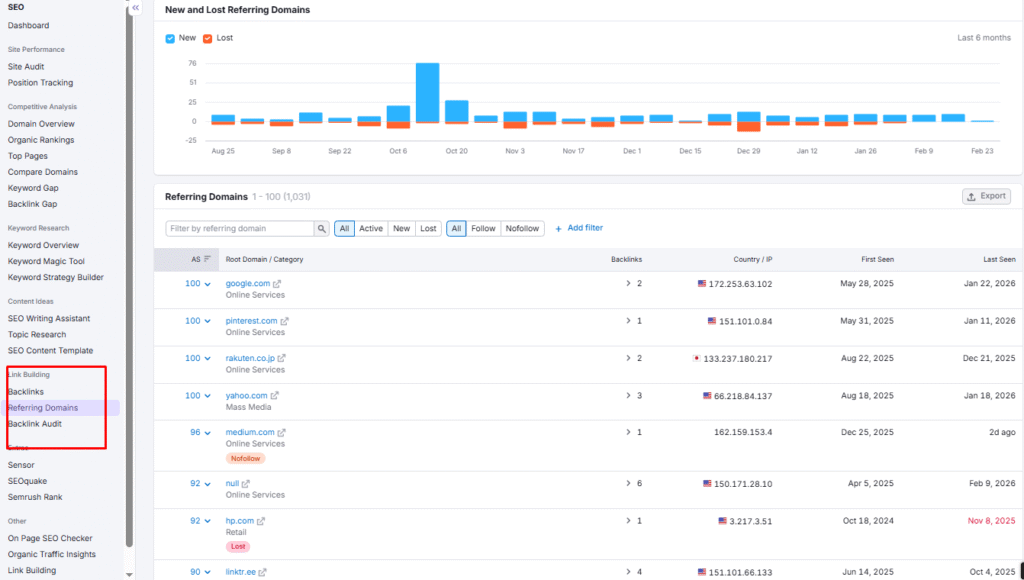
- Backlink overview
- Referring domains
- Anchor text report
- New and lost links
- Link growth chart
Do not focus only on total backlinks. Referring domains and relevance matter more.
Step 3: Analyze Referring Domains Carefully
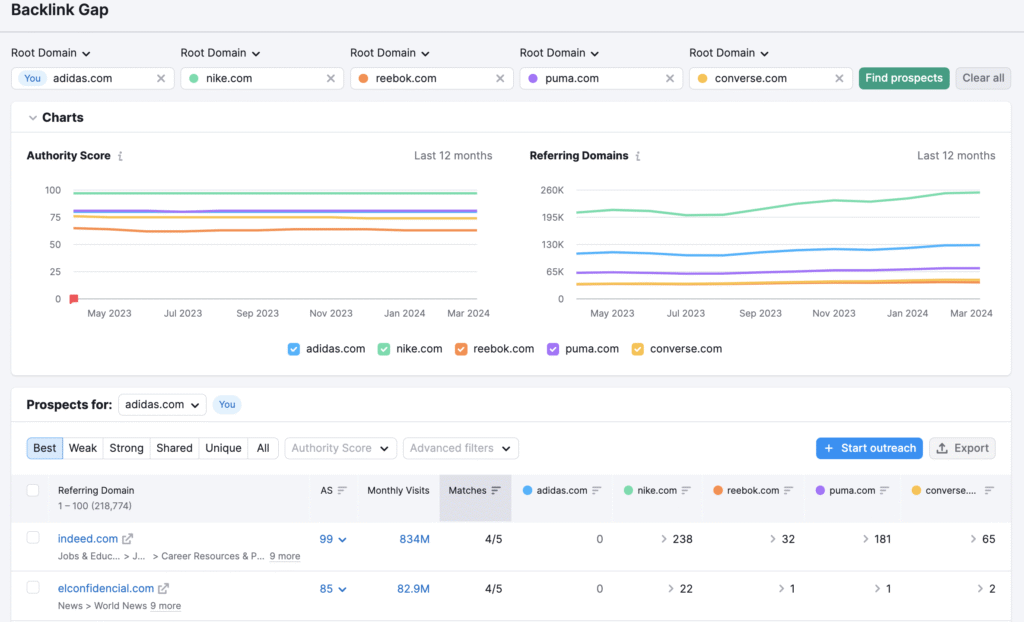
Referring domains are one of the strongest signals of authority. Ten links from ten unique websites usually carry more weight than ten links from one website.
When reviewing competitors, analyze:
- Total number of referring domains
- Growth trend over the last 6–12 months
- Authority of linking sites
- Niche relevance
Mini Example:
If a competitor has 50 referring domains, but 30 of them are from unrelated directories, the quality may be low. Another competitor with 40 highly relevant blog links may have stronger ranking power. Quality and diversity together create authority.
Step 4: Study the Backlink Profile Structure
Now look deeper into link types.
Check:
- Contextual backlinks inside articles
- Guest post placements
- Resource page links
- Homepage links
- Follow vs nofollow ratio
A natural backlink profile usually includes a mix.
If you see most competitor links are contextual and placed within informative articles, that indicates Google values editorial links in your niche. Avoid copying every link. Focus on understanding patterns.
Step 5: Analyze Anchor Text Distribution
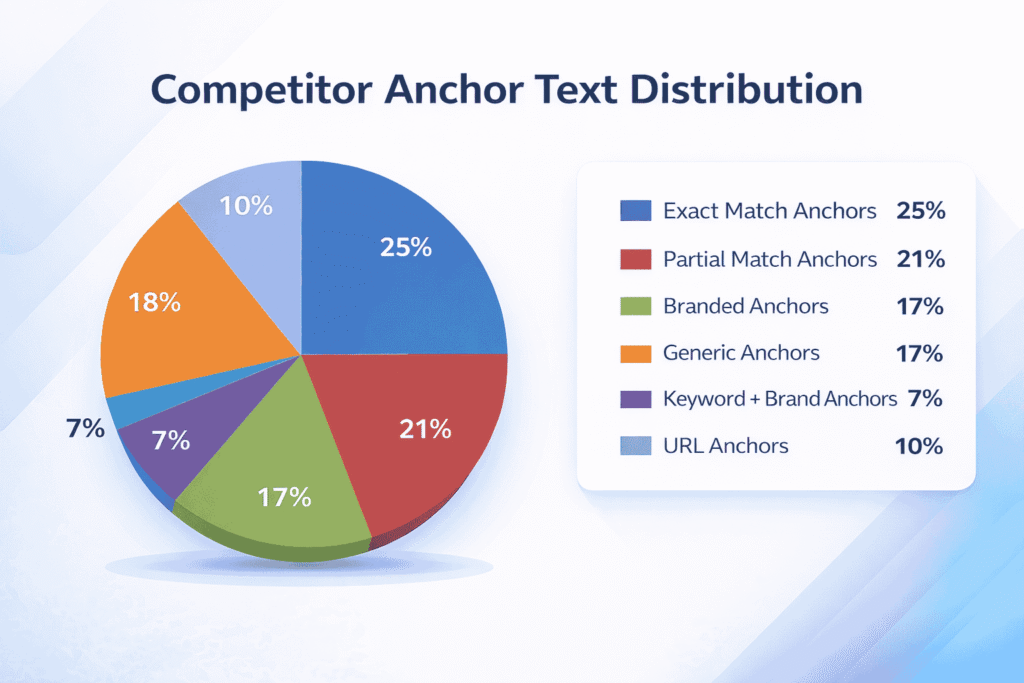
Anchor text affects how search engines understand link relevance.
Review competitor anchors :
- Branded anchors
- Partial match keywords
- Generic anchors
- Exact match keywords
Healthy profiles usually show :
- Majority branded anchors
- Limited exact match anchors
- Natural variation
Mini Example :
If a competitor has 70% branded anchors and only 10% exact match anchors, this suggests a safe strategy.
Overusing exact match anchors may increase risk and reduce long-term stability.
Step 6: Perform Backlink Gap Analysis
Backlink gap analysis compares your domain with competitors.
It reveals:
- Websites linking to competitors but not to you
- Missed opportunities
- Authority gaps
Most major SEO tools provide this feature. This method is efficient because you target websites already linking to similar businesses. Instead of guessing outreach targets, you use proven linking domains.
Step 7: Evaluate Link Quality Before Taking Action
Not every backlink is worth replicating.
Check:
- Domain authority or rating
- Organic traffic
- Content quality
- Relevance to your niche
- Spam indicators
If a competitor has links from low-quality or unrelated sites, do not copy them. A smaller number of relevant editorial links is usually more beneficial than a large number of weak links.
Step 8: Monitor Link Velocity
Link velocity means how quickly backlinks are gained.
Check whether competitors:
- Gain links steadily
- Show natural growth
- Have sudden spikes
Steady growth often appears more natural.
Mini Example:
If a competitor gains 5–8 referring domains per month consistently, that is a pattern you can aim for. Trying to build 100 links in one month may look unnatural and may not produce stable results.
How Long Does Competitor Backlink Analysis Take to Show Results?
Backlink impact usually takes time.
- 2–4 weeks for small ranking movement
- 2–3 months for noticeable improvement
- Longer for competitive keywords
SEO works best when strategies are consistent and measured.
Expanded Final Thoughts
Learning how to analyze competitor backlinks gives you clarity in your SEO strategy.
Instead of working without direction, you understand :
- The authority level required
- The type of backlinks working in your niche
- The anchor text patterns ranking pages use
- The growth pace of successful competitors
This transforms link building from random action into planned execution.
Competitor backlink analysis is not about copying every link. It is about understanding patterns, identifying realistic targets, and building relevance gradually.
When combined with strong content, proper internal linking, and consistent outreach, this approach improves your ranking potential in a stable way.
SEO success does not come from volume alone. It comes from relevance, quality, and steady growth.
By analyzing competitor backlinks step by step, you build your strategy on real data instead of assumptions.
That foundation increases your chances of ranking sustainably in 2026 and beyond.